Timed drinks breaks, 15-minute meetings, training at 90 per cent of match intensity and a short, sharp spray in front of the squad. The former Socceroos goalkeeper on life as Mourinho's back-up keeper...
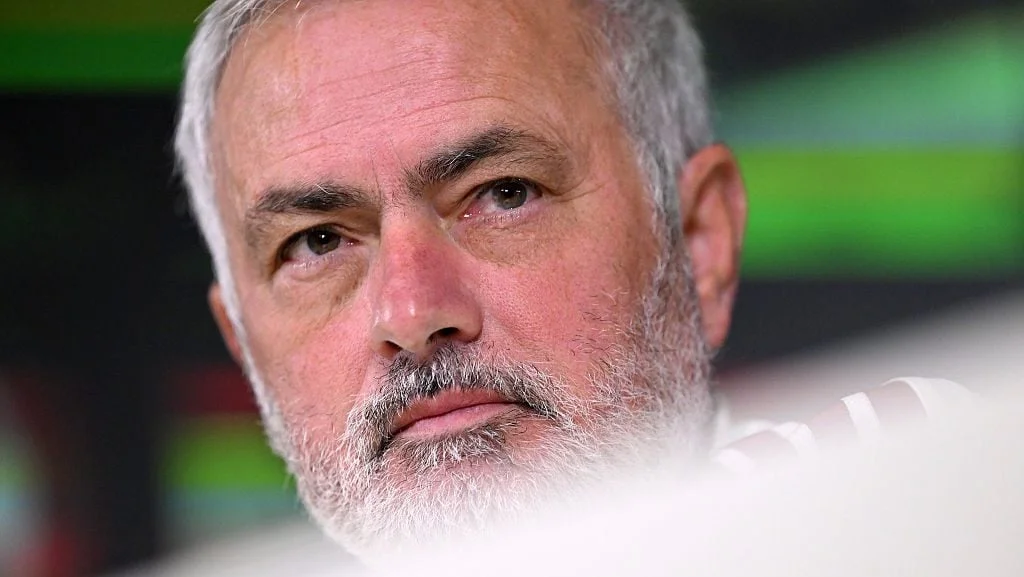
Jose Mourinho has returned to the summit of in club football again this week, marking Real Madrid’s 2-1 El Clasico win over Barcelona in LaLiga with the recreation of his classic knee slide.
His celebration after Kylian Mbappe’s winner, some 16 years after hitting the turf as Inter Milan boss at the same venue, was a little less athletic, with a little more grey, but with the same ferocious winning obsession that has seen him return to Los Blancos after 13 years.
The 63-year-old has returned firmly to the front and centre of the spotlight thanks to the recent Netflix series on his career and this week, he ended Barcelona’s nine-game LaLiga winning streak with the win and proved the doubters wrong once again who thought this stage might be past him now.
Former Chelsea goalkeeper Mark Schwarzer, who was signed by the Portuguese at Stamford Bridge in the twilight of his career, admitted he was one of those who didn’t expect him to be back barking instructions at the Santiago Bernabeu.
Speaking on his Mark Schwarzer Podcast on Football360, he then gave titilating insight into what it is like playing for The Special One. Listen or watch on Spotify, Apple Podcasts or YouTube, or we have provided a transcript of the highlights below.
He’s proved the doubters wrong
“I think wrongly, I probably believed that it might be a little bit too far now, that step too far, maybe it’s gone a little bit too long now for him to get back to that top top. And look, it’s one game, right? But it’s a big game and it’s an almighty win.
“And I hold my hand up and take the criticism because anyone who writes off Jose Mourinho is mad, because he time and time again proves people wrong.
“And the guy has also shown that he can evolve. There’s no doubt, look, he’s still got some of the old traits and he can still be very ruthless. He can be off the cuff. He can be emotional. And that’s all what makes Jose Mourinho and a lot of the top managers. We see it with all the top managers. They have all those traits, the drive, the determination, the thick skin, all that stuff.
“Jose is time and time again proving people wrong and reconfirming his eliteness. But it’s still a long way to go, a great step in the right direction. And it makes it a little bit more interesting once again in Spain.”
An eye opening experience at 40 years old
“He’s a great entertainer. He’s a fascinating person to work with, to talk to, to have an insight into how he sees the game. I’ve said it way back at the time when I first went to Chelsea, it was one of the most eye opening moments I ever had in my career, at the age of 40 years old, signed for Chelsea and then walk in this environment.
“It almost hits you like a wall.
“The minute you walk in through those gates the expectation is to win every single game.
“The demand, the expectation is almost overbearing.
“And the level of training and the detail and the precision of timings of how you train, how much you train, at what intensity you’re training. And the first time I’d ever seen two football pitches right next to each other, completely made up with ball boy stroke kit men with pieces of paper with the complete layout of each drill and running around like mad people.
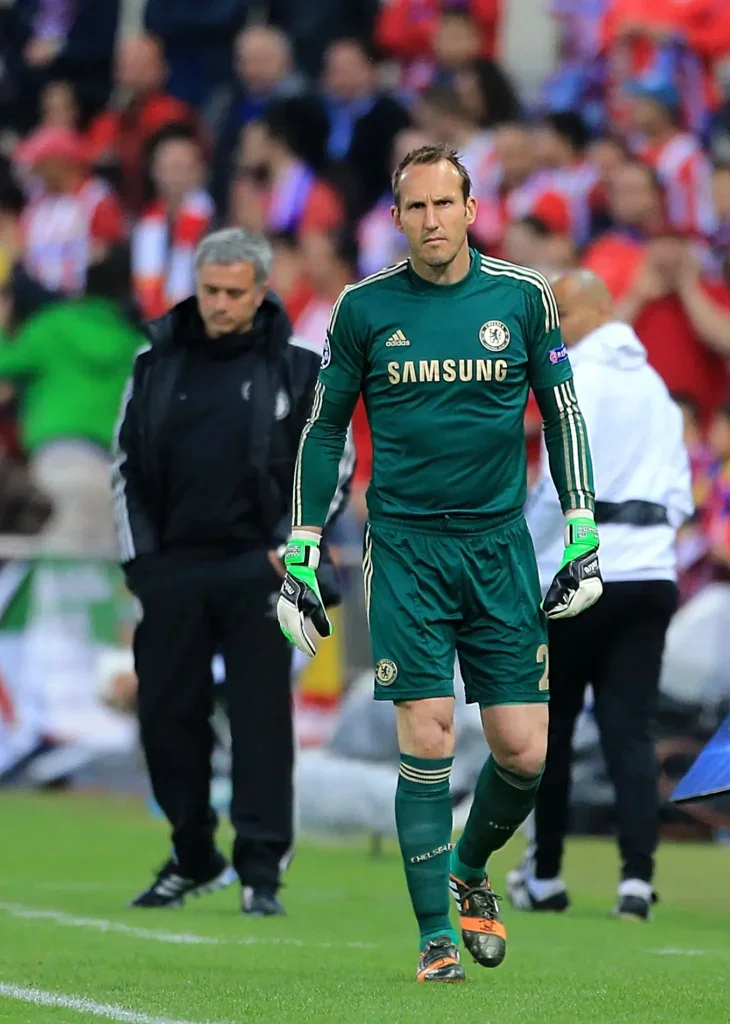
“The minute you finished one little drill, you’re not even off the pitch. They’re running on, they’re scattering on, there’s three or four of them and just picking up all the cones and readjusting for the next session. But you move to a different part of the pitch and the talk was happening whilst you’re getting your drink and the talk was timed, right? So the drink and pause is timed to then incorporate the talk and then get on with the next session.
“And it’s just the level of detail and then the intensity. The level of intensity was something like I’d never ever worked with before. At other clubs we’ve had moments, but every drill that they did, because it’s so precise and because everything is so timed, there is then a minimum expectation of intensity. And I’m telling you, it was like 85 per cent to 90 per cent of match play, possibly even higher. So the closest you could get almost at times to a match.
“So players had to go at it and there was a demand and you were being barked at, you were being criticised if you didn’t play at that level, he wasn’t happy. But most of the players did, right? So it was an expectation from all the players. And then there was a demand from the players to get things right and to do things right, because the level was so high, the bar was so high. So it was fascinating. It really was.
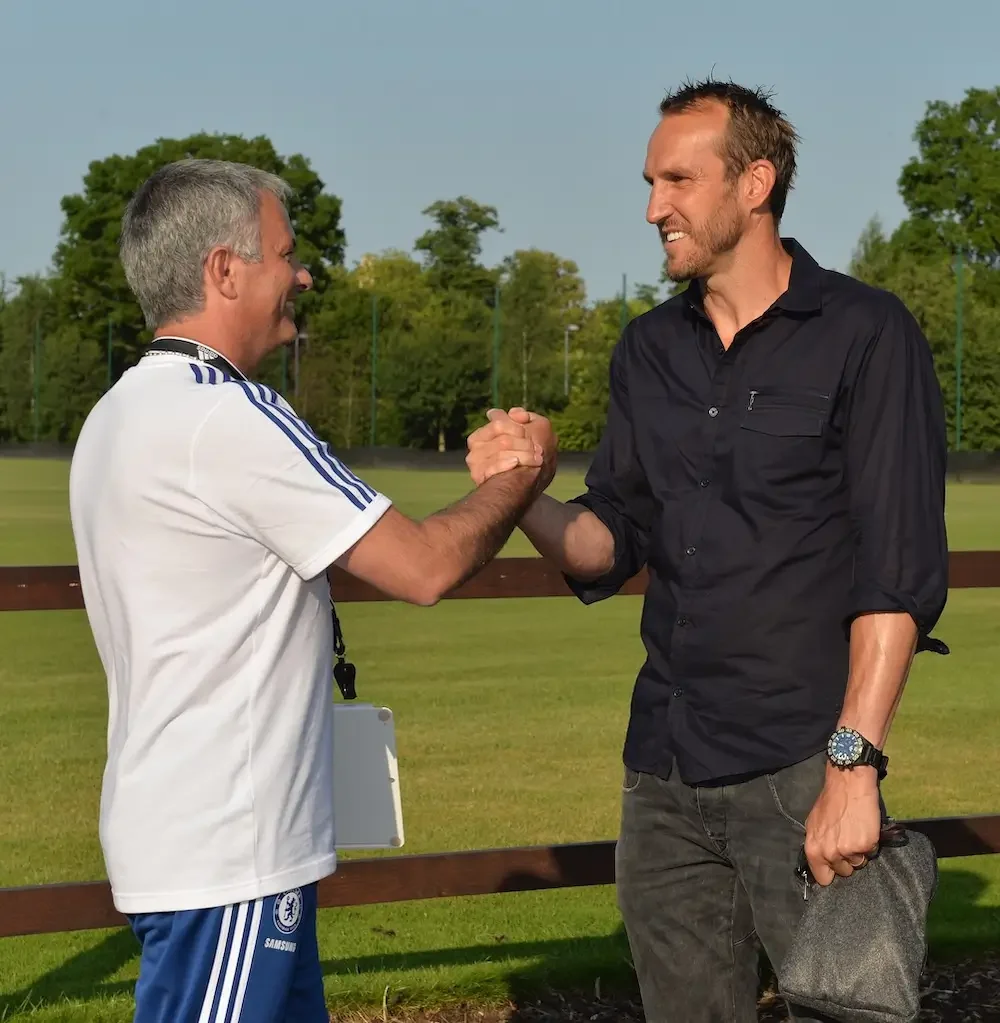
“You would train five days a week or whatever it is and there was one day of the week, which was funny enough, interestingly, it was the day before the game, where you went through all the meetings and, depending on how your games went through the week, if you had midweek games and so forth, you may have four meetings on the day before a game.
“They’re in blocks of like maximum 10 minutes, 15 minutes each meeting. And one was about defensive set plays, then attacking set plays, and then how we’re going to approach the game, and then the next one would have been how we’re going to combat the opposition and the way in which they play.
“And they were done in like 10 to 15 minute blocks. So you’d go in before training, do one, come back out, go and do something, come back and then do another one, or you wouldn’t go back in, you’d go back after training again. And then you go off and have lunch, come back after lunch, and you do another one. So it was purposely done because of attention spans.
“And it was very impactful. For me, I was like, every time you go in, you’re switched on. You are fully focused and ready. Whereas I’ve been in lots of meetings where they go on for half an hour, 45 minutes, even an hour. And people are getting fidgety. They’re not listening anymore. They’re looking out the window and it’s just dragged on way too long. Whereas his was every time the information’s getting absorbed.”
Why Schwarzer earned Mourinho’s praises in public & the promise Jose couldn’t keep
“I think there was a number of things. For me, certainly I know that he knew that I gave him everything. Obviously, for me to give him everything, I had to be from day one on the training field, right? Because that was the way I could show him the most because I didn’t play very much.
“Also, there was an expectation of playing a certain number of games. It was a conversation that I had with him before I signed for the club because at the time I was still playing for the national team and I wanted to go to the World Cup in 2014.
“So my whole reluctance to sign for Chelsea back then was because I knew that I was signing as a number two if I were to sign and that my game time would have been limited. So I had those conversations with him and said, look, the only concern I have is, look, we’re talking about signing for Chelsea and club of that stature and expectations and the players, you’d snap people’s hands off to sign for it. But for me, at that stage in my career was about the realisation that if I sign for Chelsea, I’m not number one anymore. And it’s going to be difficult for me personally then to maintain my position within the national team and justify it.
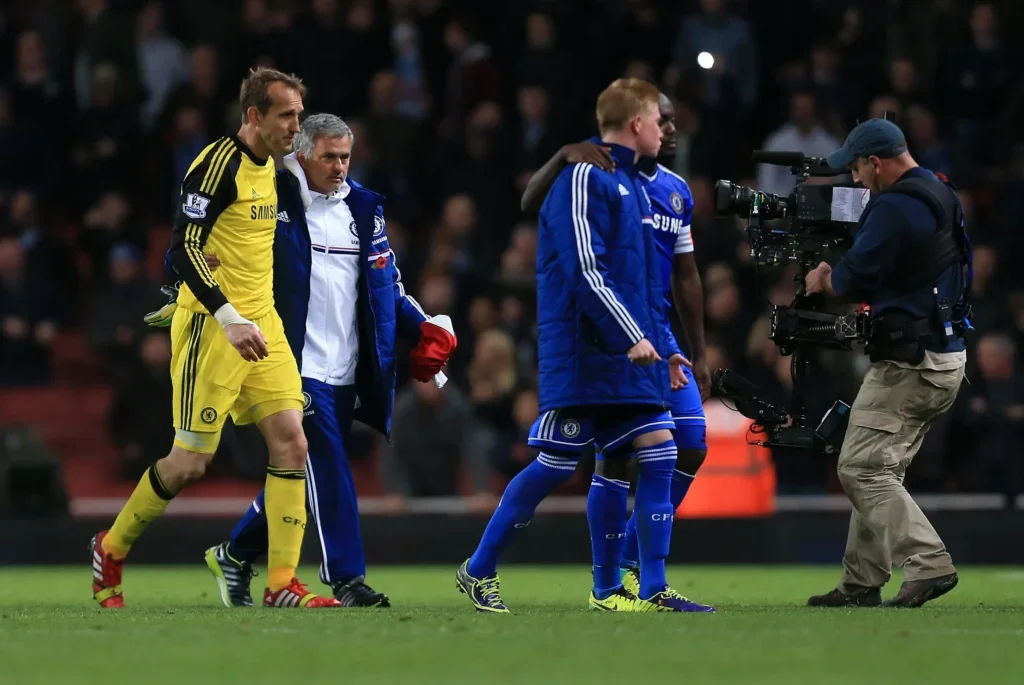
“So we had these conversations and he said, look, you’re going to play enough games. I will make sure. Petr (Cech) over the years has had lots of injuries and at that time he’d missed so many games per season on average through injury, right? No fault of his own, but through injuries. And he said, so I’ve got no doubt you’ll play your games. Anyway, came around to like November, December time and Petr didn’t get injured. And he just said to me, he went, ‘Look, I’m sorry.’ He goes, ‘I thought you were going to play more, but obviously Petr hasn’t been injured and he’s been playing and he’s been playing well.’ I said, look, it is what it is.
“He also knew, I said to him, look, the other incentive is it’s not only because it’s Chelsea and they can win titles and play in all the competitions, I’ve never been involved in the Champions League before. That’s one thing I’ve never ticked off and I’d love to play in the Champions League. So he plays me in the last group game in the Champions League. We were already qualified for the knockout stages, but it was a case of if we win it, we finish top of the group in the old group stages, with four teams in a group. And so we played (Steaua) Bucharest at home and we win 1-0. And that was my debut in the Champions League, which was pretty special. Even though it was at home to Steaua Bucharest and it wasn’t a big crowd, it was a decent crowd, but it was a different game kind of thing, but it was still, for me, it was a big thing.
“So then my next opportunity in the Champions League was when Petr got injured and then I played the rest of the season for, I can’t remember, six, seven games or something like that. And I think he just felt that he knew that every day at training I gave everything…
“Jose also saw the level of detail and the level of commitment and the level of training that we did and that I was leading everything on the training field all the time and I think he just really respected that.”
Being on the end of a brutal barrage
“And Jose was very, very big on, didn’t matter who it was, if you didn’t do what he wanted you to do at training he would say it and he would be brutal. And there was one particular session where I made the same mistake twice in a very quick succession, playing a small possession game, using your feet and all that sort of stuff. And he just unleashed himself. He’s given it to me and it was short and sharp. It wasn’t like on a rant, but the thing that he really, really expected and wanted and admired was that you took it. You just took it on the chin.
“You rolled your sleeves up and if you got angry, you got frustrated with it, but you use that then to make sure you didn’t make another mistake and you just got on with it. And that’s what I would do. So that’s just normal. No one likes to be dug out.
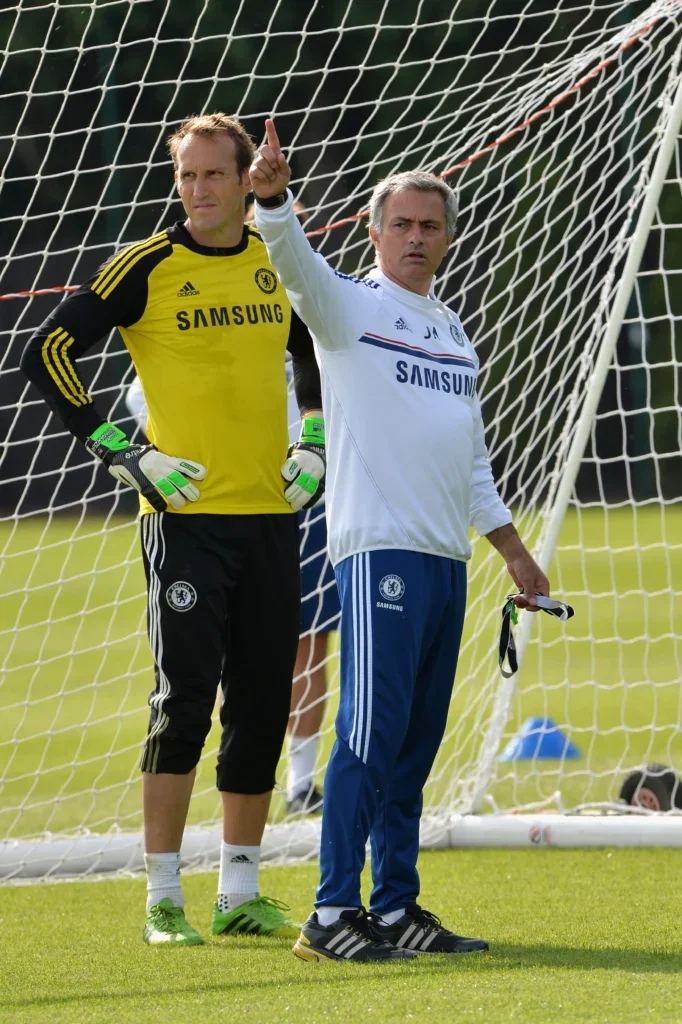
“It’s horrendous. It’s terrible. It makes you feel miniature.
“It was brutal. I remember just going, it was brutal.
“You’ve got all these players, right? Superstars, and you’re just going, far out, I’m just being absolutely annihilated here. The thing was, no one said anything about it. Everyone was just like, yeah, that’s just what happens. They expected better and the manager expected better and the coaching staff expect better. That then funnels that onto you that you need to expect even better and more of yourself, even though I did, but on another level.
“Even at 40, I was learning things like that, the detail of it. And I’d been in the Premier League for a long period of time, but it’s very different being in a club like Chelsea who are expecting and demanding and willing and need to win titles every year and what it takes at that level and the type of players you’ve got, and their expectations and what they expect from their teammates and what they expect from match days and what they expect on winning games and winning titles. And that just blows your mind at times.
“So Jose was not reluctant at all. But I think he really respected the fact that I just got on with it and never held a grudge and kind of like brushed it off. It was never nice. No one likes it, but it was just, okay, yeah, I messed up. Yeah, fair enough. And then you get on with it and you just move on with it and you make sure that you don’t do it again.
“It’s been referenced a lot when you talk about players today compared to before. And there are elements of it that are really good that have been lost, of the way in which players were able to digest that, to suck it up. And today it’s less because, through academies, there’s a different kind of approach. There’s a more human element to it. There’s more of a guidance. There’s more of a positive thinking all the time, not necessarily about being as straight to the point.
“The brutality of academy football is just when you get told you’re not good enough anymore. All the way through it, there’s always encouragement and there’s guidance and there’s a willingness to try and improve you. And then all of a sudden you just get dropped, get told, sorry, you’re not good enough. You’re not going to make the cut. So that’s the brutality of it these days.
“Whereas in the old days, there was stuff that went on that should never happen. And the kind of levels of expectation and, I suppose, verbal abuse that people would get, it’s not something that I would encourage, but I think it also created a different player and allowed players to come forward and come through and be able to take those sort of criticism when you get to the top. The difference between reality in terms of how it operates within a first team environment, and then through the ranks, they’re two very, very different places.
“So I think when players come through the academies and get into those environments, there is almost a shock and a sense of, wow, like that’s how people speak to each other. Because that’s never ever happened before in their development. And I think that’s where there’s an element of, well, players are just too soft these days. Players can’t take criticism. And they are a product of the environment they’ve come through.”
Discussion
Sign in to join the discussion.